
Whether Sp5der Is the High-End Label or Urban Fashion
The inquiry appears easy sufficient until you really endeavor to resolve it: does Sp5der qualify as a premium brand or a streetwear label? As of 2026, this inquiry has become progressively hard to settle because the two segments are converging into one another for years, and Sp5der occupies a intriguing position exactly at that crossroads. Sp5der commands costs that casual clothing shoppers would connect with premium products — sp5der hoodies typically are priced between $150 and $350, and aftermarket prices rise considerably higher for coveted colorways. Yet, the distribution approach, the design identity, the cultural community, and the founding history all seem undeniably embedded in streetwear. Heritage brands function from heritage institutions; Sp5der grew out of music tradition and drop culture. And yet, labeling it just urban wear appears reductive given the pricing, the community standing, and how the brand continues to be recognized by the fashion media. This is nowhere near a matter with a clean binary conclusion — it is a question that exposes something deeply revealing about how the fashion industry continue to develop in the modern era.
What Constitutes a Label “Luxury” in the Current Era
Prior to categorizing Sp5der along any spectrum, it is valuable examining what luxury branding really means in 2026, because the concept has changed substantially from what it was only ten years ago. Conventional high-end houses — think Hermès, Louis Vuitton, Chanel — rests upon a particular model: brand history legacy, skilled craftsmanship, selective availability through exclusive retail spaces, and prices that indicate maximum prestige to the mass market. The components are outstanding, the manufacture is demonstrable, the heritage is long, and the customer base is tacitly determined by affluence. Present-day designer brands has complicated this framework, as brands like Off-White, Palm Angels, and Balenciaga proved that street-inspired visual language and high-end cost structures could coexist seamlessly. Scarcity, cultural relevance, and celebrity association have developed cool spider hoodie as different foundations for premium positioning, augmenting or replacing the original elements of heritage and craftsmanship. In this broadened framework of high-end fashion, Sp5der qualifies on several dimensions: it is rare, it is culturally significant, it maintains elevated retail values, and it carries considerable social signaling worth. But, Sp5der does not possess the atelier-made backstory mythology, the tailored craftsmanship levels, or the wealth-based wealth-association that marks traditional high-end houses. The premium question is ultimately about which definition you adopt — the conventional one or the evolving current one — and genuine grappling with that matter uncovers greater insight than any simple yes-or-no response.
The Reasons Makes Sp5der Unquestionably Streetwear
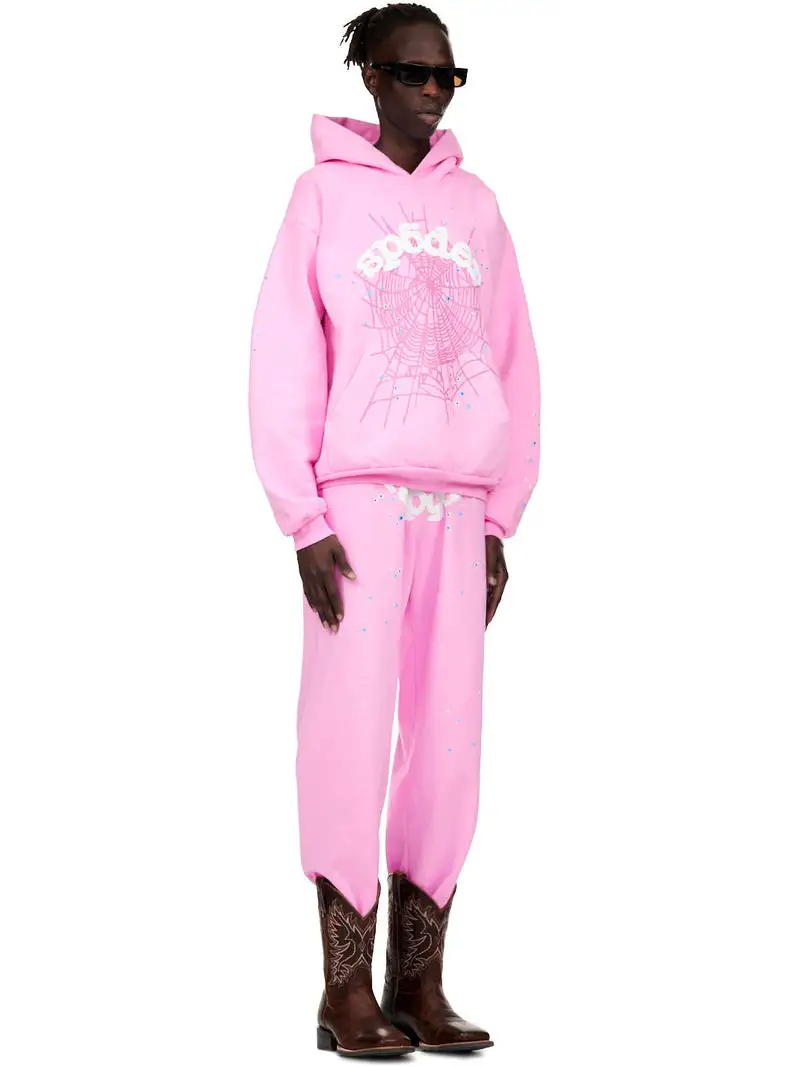
Considering the urban fashion angle of the analysis, Sp5der’s standing are practically beyond question, and its alignment with fundamental street culture principles is visible in nearly every dimension of how the brand operates. Limited-quantity model is the clearest indicator: making available limited quantities of product at irregular occasions to generate shopping waves of excitement is the defining mark of street culture, from Supreme to Palace to Sp5der. The aesthetic language — vivid images, cobweb graphics, saturated colorways, oversized silhouettes — borrows straight from the graf, skateboarding, and rap artistic traditions that gave birth to urban fashion as a movement. The origin history is streetwear in every way: a rap creator creates a brand that expresses his personal style and cultural identity, growing a tribe of like-minded followers around a unified aesthetic identity. The core sales method — a DTC online store with infrequent in-person events — parallels how every landmark urban fashion label engages with its fans since the digital revolution allowed direct distribution feasible. The culture that develops around sp5der clothing — following new pieces, arguing about hues, fighting to acquire garments at standard price — is fundamentally identical to the followings that grow around Supreme, Bape, and every other label that has shaped street fashion development over the past thirty years. Sp5der’s retail prices is more than typical street fashion but under traditional designer price points, which establishes it in the upper-echelon streetwear tier that has developed consistently since Kanye West proved with Yeezy that street fashion could achieve near-luxury pricing without compromising its cultural identity.
Reasons to Consider Defining Sp5der as a Luxury Label
Despite its street culture origins, there is a reasonable argument to be made that Sp5der has stepped into designer territory — or at least into a different tier that requires a updated framework. The secondary market prices for the most desirable sp5der hoodies climb into the three-figure range and at times multiple thousands of dollars, putting them in a cost bracket that aligns with true designer products by most metric. The community prestige connected to having an verified sp5der hoodie at retail — the specialized knowledge necessary, the competition involved, the community recognition it creates — parallels the kind of status dynamics that have always been fundamental to the way designer products work in cultural contexts. The brand continues to be analyzed in industry magazines that usually cover the designer market, indicating that the fashion world’s own arbiters of taste have accepted Sp5der into a discussion historically saved for more established brands. The truth that faking is widespread in the sp5der ecosystem is a back-handed proof of premium desirability: counterfeits proliferate where genuine items command true status, and the counterfeit market around sp5der clothing is as sophisticated as the one around Louis Vuitton or Gucci. Younger consumers in 2026 routinely invest sp5der premium on pieces they regard with the identical care and appreciation that prior buyers held for collector-quality luxury items — preserving them with care, following their worth, and wearing them only in suitable context. The personal connection that passionate enthusiasts hold toward their sp5der hoodies is identical from how premium consumers relate to their most cherished pieces, no matter which category name the label technically claims.
Sp5der vs. Established Premium: An Comparative Comparison
| Criterion | Legacy Luxury (e.g. Gucci) | Sp5der |
|---|---|---|
| Pricing | $500–$5,000+ per item | $150–$350 retail; elevated on aftermarket |
| Distribution | Exclusive stores, high-end retailers | Digital releases, occasional in-person events |
| Origin | Centuries of company lineage | Started in the early 2020s by Young Thug |
| Limited availability approach | High cost + selective distribution | Low output + drop culture |
| Social prestige | Affluence and prestige communication | Cultural knowledge and social membership |
| Primary customer | Affluent adults, 25–55+ | Younger 16–30, streetwear and urban fashion following |
| Fake ecosystem | Substantial (Vuitton, Gucci, Chanel) | Substantial and increasing |
The Top-Tier Streetwear Segment: Where Sp5der Truly Sits
The most defensibly precise response to the luxury versus streetwear discussion is that Sp5der exists within a tier that did not have a established label until the last decade: top-tier street fashion. High-end streetwear refers to names that are embedded in street fashion’s origins and ecosystem but function at pricing levels, cultural standing degrees, and production levels that significantly surpass what the word “streetwear” historically communicated. The segment’s notable members include brands like Rhude, Fear of God, and the top echelons of Kanye West’s Yeezy brand — brands that emerged out of rap and city culture but now maintain pricing and community influence that challenge the conventional boundaries. What distinguishes premium streetwear from traditional luxury is mainly the legacy lineage and the delivery method: luxury labels maintain lineage and controlled retail environments; elevated streetwear labels have street-culture immediacy and internet-native distribution. What distinguishes it from traditional street fashion is price, material benchmark, and cultural ambition. Sp5der suits this structure exactly — it is too expensive and too culturally significant to be lumped with cheap street fashion names, but too street-culture-oriented and internet-native to fit naturally next to Gucci or Louis Vuitton. Based on Business of Fashion’s analysis of the premium streetwear sector, labels in this segment are the quickest-growing section of the international clothing market, outpacing both established luxury and mass-market apparel in revenue development and consumer demand. Sp5der’s place in this segment is both well-placed and culturally important in 2026.
The Reason Why the Answer Really Matters to Purchasers
Knowing the space in which Sp5der sits on the luxury-streetwear continuum is not merely an theoretical labeling activity — it produces practical consequences for how consumers connect with and invest in the name. If Sp5der be mainly a urban fashion brand with premium cost structures, fans may reasonably doubt whether the extra investment is reasonable purely by material standards, and the response would be uncertain at most. Should it be practically a social luxury item — where the price represents social currency and public signaling strength instead of physical expense — then the calculation changes completely, and the added price emerges as more logical within its own framework. Shoppers who treat sp5der clothing as elevated streetwear — investing for community access and cultural alignment as much as for the tangible product — typically feel far more satisfied with their acquisitions than buyers who judge it merely as a product. The label’s positioning also influences resale behavior: high-end streetwear with genuine cultural capital holds value more reliably long-term than fashion-forward garments from labels with shallower history. Today, the most useful perspective for approaching Sp5der is as a different type of high-end — a version rooted in community awareness, group inclusion, and limited-release involvement more than old-money heritage and department store distribution. That rethinking doesn’t lessen the brand; if anything, it positions it more remarkable as a creative and market story deserving to be recognizing on its unique terms.

Leave A Comment